
Metal Carports in Florida
If you need covered parking for a vehicle, tractor, equipment, or boat — a metal carport is the fastest and most affordable way to protect what you own. We install single, double, and triple-car carports across Brevard County, Central Florida, and surrounding areas.
What People Use Carports For in Florida
A carport is not just for cars. Most of our customers are protecting something specific — a daily driver, a work truck, a boat, a tractor, or outdoor equipment that sits in Florida sun and rain year-round. Here are the most common setups we build.
Single & Double-Car Parking
The most common request. A single-car carport starts at 12 ft wide; double-car starts at 18–20 ft. Works for daily drivers, a second vehicle, or a work truck you want out of the Florida sun.
Tractor & Equipment Covers
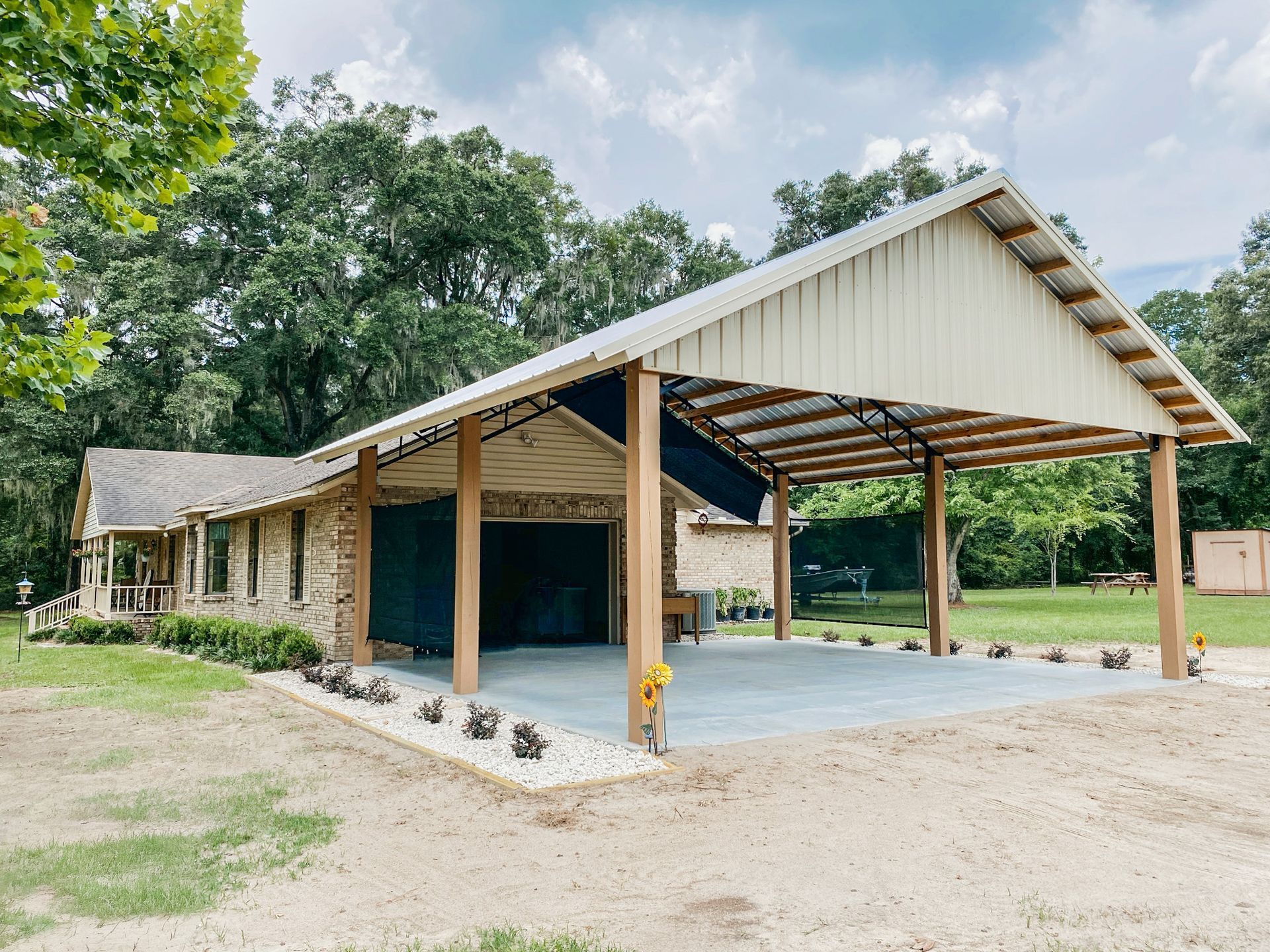
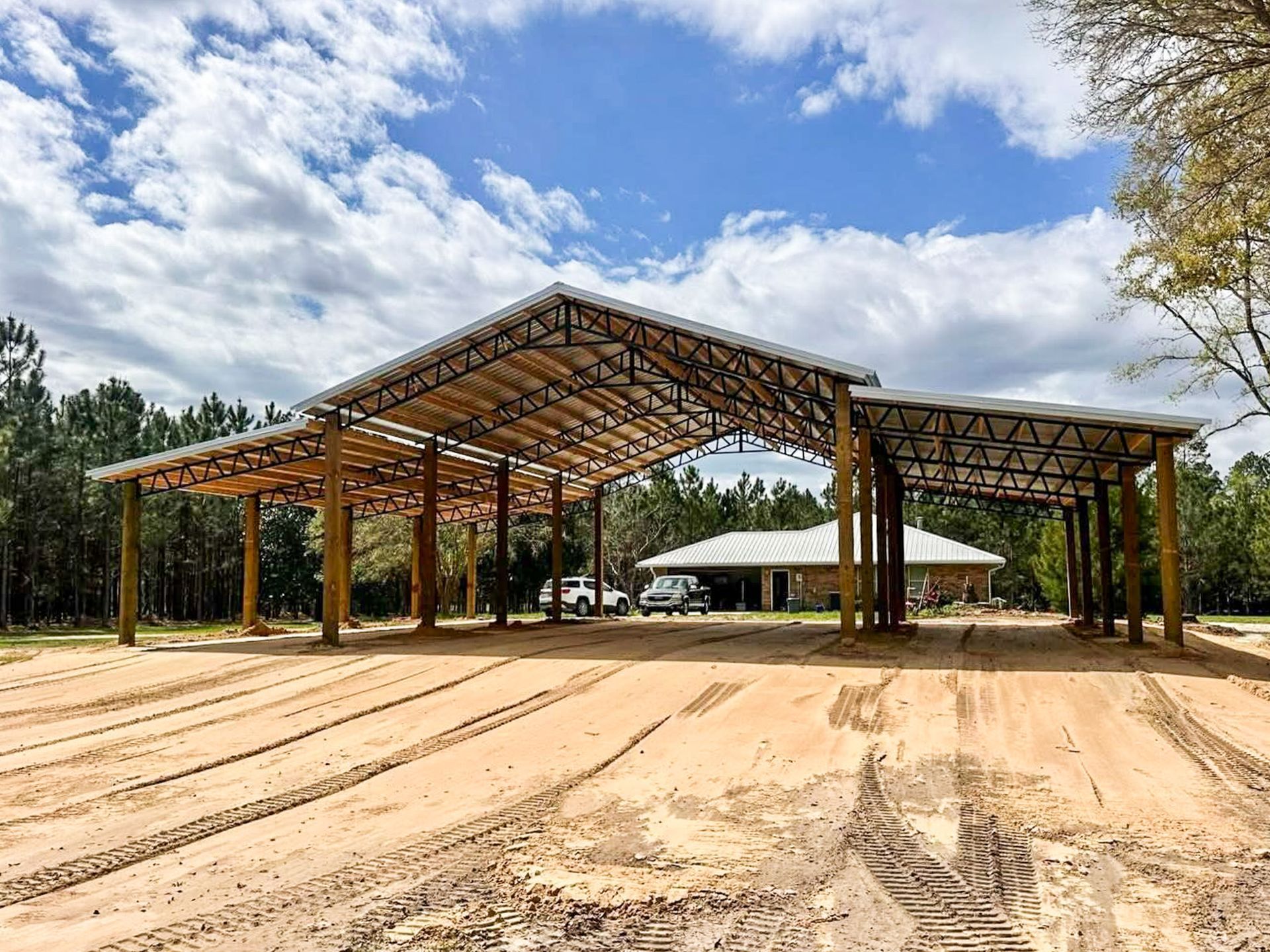
If you own acreage, you know how fast Florida sun and rain degrade equipment. A wider carport — 24 ft or more — keeps tractors, mowers, and attachments protected without the cost of a full enclosed building.
Motorcycle, ATV & Toy Parking
ATVs, motorcycles, and recreational equipment are easy targets for rust and UV damage. A simple carport gives you covered parking without locking everything indoors.
Carport + Storage Hybrid
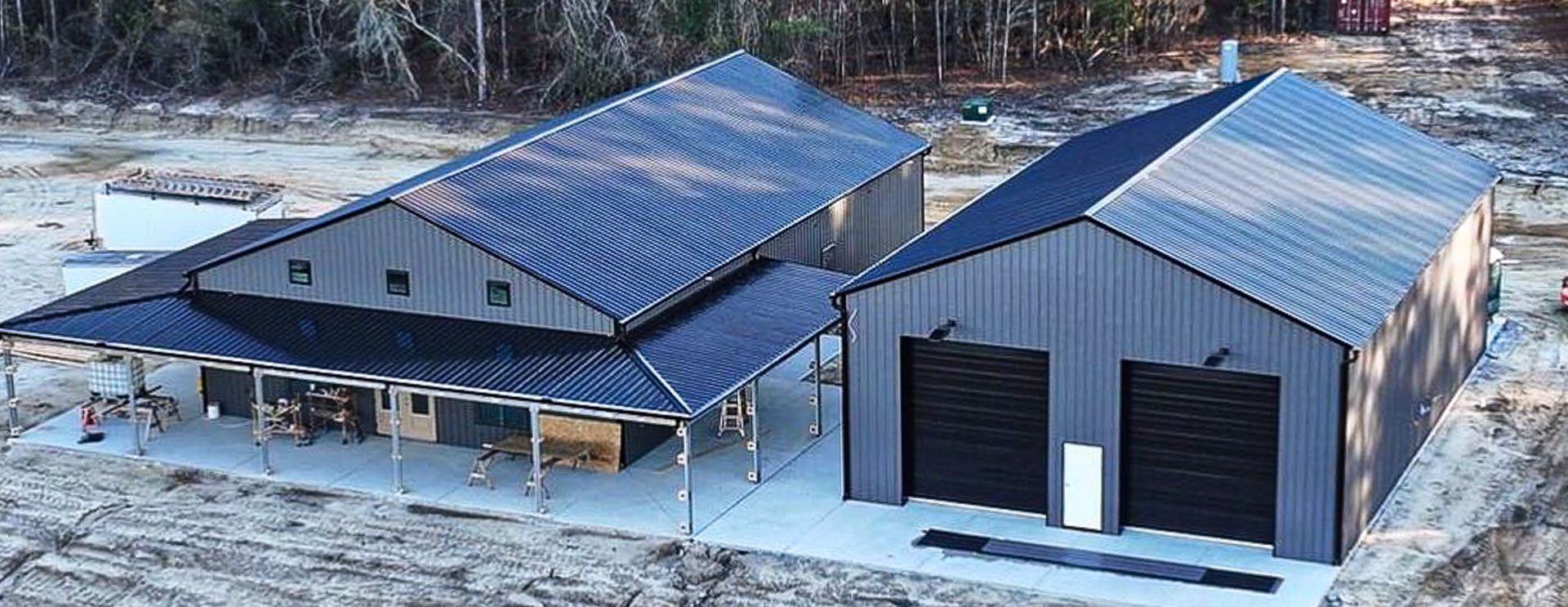
Some customers add a back wall or side panels to create a combo: open covered parking on one end, partial enclosed storage on the other. This is a popular step-up option before committing to a full enclosed building.
Carport Sizes, Styles, and Roof Options
Not all carports are the same. Width, length, height, and roof style all affect how the building performs in Florida weather, what it can hold, and what it will cost. Here is what you need to know before requesting a quote.
Width & Length Options
Standard widths run 12 ft (single), 18–20 ft (double), 24–26 ft (triple or equipment). Lengths are typically 20, 21, 26, 31, 36, 41 ft and up. Custom sizes are available. Most homeowners start by measuring the vehicles or equipment they want covered, then add clearance on each side.
Eave Height
Standard eave height is 6 ft. If you are covering a truck with a tall topper, an RV, or farm equipment, you will want 8 ft, 10 ft, or taller. Height affects price and — once you cross certain thresholds — permit requirements.
Regular Roof Style
The most affordable option. Horizontal panels with rounded corners. Water can pool along the length in heavy rain. Fine for light-duty use but not the strongest choice in Florida's weather patterns.
Boxed-Eave (A-Frame) Style
A-frame shape with horizontal panels. Better water runoff than a regular roof. More structural presence. A popular mid-range option when budget matters but appearance counts.
Vertical Roof Style — Recommended for Florida
Panels run vertically — water and debris shed off the roof instead of collecting. This is the style we recommend for most Florida customers. It performs better in heavy rain, hurricane-season wind loads, and high-humidity environments. It costs slightly more but holds up significantly better over time.
Carport Upgrades That Change What You Get
A base carport is a starting point, not a ceiling. Depending on your property, your county's wind requirements, and what you are protecting, upgrading a few key items can make a significant difference in performance, longevity, and whether you need a permit.
Side Panel Enclosure
Adding one or more side panels to a carport converts open sides into a wind break and partial enclosure. You can close off one end, both ends, or add a full back wall. Each panel added changes the building's permit classification and cost — but also dramatically improves protection from wind-driven rain.
Wind Bracing & 170 MPH Rating
Standard carports are not rated for Florida's strongest storms. If you are in a coastal area, a flood zone, or simply want peace of mind, upgrading to the 170 MPH wind-rated option adds cross-bracing and structural reinforcement. In some counties, this rating is required to pull a permit.
26-Gauge Steel Panels
Standard panel thickness is 29 gauge. Upgrading to 26-gauge panels adds rigidity and dent resistance — a meaningful upgrade if the carport is near a road, fence line, or in a high-activity area. It also improves long-term finish durability in salt-air coastal environments.
Anchor Options
How the carport is anchored matters more than most buyers realize. Ground anchors (for grass or dirt) and concrete anchors are the two main options. If you are on a concrete slab or plan to pour one, anchor type changes the install approach and affects what the permit requires.
Adding vertical siding, wainscot, colored screws, or a specific color combination is available too. When you request a quote, let us know if you have any preferences — we will include them in the options we send back.
Permits, HOA Rules, and Site Conditions for Florida Carports
Whether you need a permit for a carport in Florida depends on your county, the size of the structure, how it is anchored, and whether it is open or partially enclosed. Here is what most property owners in Brevard County and Central Florida need to know.
When Is a Permit Required?
In most Florida counties, a carport under a certain square footage that is open on the sides and set back far enough from property lines does not require a permit. Once you enclose a side, exceed the size threshold, or install in a regulated wind zone, the permit requirement kicks in. Brevard County, Orange County, and coastal counties each have slightly different rules. We can help you understand what applies to your address.
HOA Restrictions
If your property has an HOA, check your CC&Rs before ordering. Many HOAs restrict carport placement, height, roof color, or require that the structure match the home's exterior. We cannot pull HOA approval for you, but we can walk you through the typical approval process and provide product specs your HOA may need.
Anchor vs. Concrete
On grass or packed dirt, we use auger-style ground anchors. On an existing concrete slab, we anchor into the slab with wedge or epoxy anchors. If there is no pad yet and you want one poured, we can scope that as part of the project. The anchor method affects install time, cost, and what your county requires for a permit.
Site Readiness
We prefer a reasonably level surface with basic vehicle access. If the site has drainage issues, significant slope, or large trees close to the install area, let us know when you request a quote. Site conditions affect both install timeline and cost.
Carport Questions We Hear All the Time
If you are comparing options or trying to figure out whether a carport is the right fit, these are the questions most buyers ask before they request a quote.
How much does a metal carport cost in Florida?
A basic single-car regular-roof carport starts around $1,500–$2,500 installed, depending on size and anchor type. A double-car vertical-roof carport with side panels runs $3,500–$6,000 or more. Equipment covers, triple-wides, and combo structures with enclosures vary widely. The most accurate way to get a real number is to tell us the size, roof style, anchor type, and any upgrades you want — and we will put together an actual quote.
Do I need a permit for a metal carport in Florida?
It depends on the county, the size of the carport, how it is anchored, and whether any sides are enclosed. Many open, ground-anchored carports under a certain square footage do not require a permit in Florida. Once you enclose a wall or exceed size limits, a permit is typically required. Coastal and high-wind zones have stricter requirements. When you submit a quote request, include your ZIP code and we will factor in what we know about your area.
What is the difference between regular, boxed-eave, and vertical roof carports?
Regular roof carports have rounded corners and horizontal panels — the most affordable style but the weakest in heavy rain. Boxed-eave (A-frame) carports have a peaked shape with horizontal panels — better runoff than regular but still not ideal for heavy storm areas. Vertical roof carports have panels that run perpendicular to the ground, which means water, pine needles, and debris shed off the surface instead of collecting. For Florida weather, we recommend vertical roof on anything you want to last more than a few years.
How long does it take to install a carport?
Most carports can be installed in a single day — sometimes half a day for a simple single or double-car unit. Larger equipment covers or combo structures with enclosures may take two days. Lead time from order to install varies depending on scheduling and material availability. When you request a quote, we will give you a realistic estimate based on current scheduling.
When does it make more sense to buy an enclosed garage instead of a carport?
If you want to store tools, equipment, or valuables safely — or if your county's permit process for a carport is nearly as involved as a small garage — it is worth comparing both. An enclosed garage gives you security, insulation options, and more flexibility for doors and windows. We can quote both options side by side if you are on the fence.
Can I add sides to a carport later?
Yes, in most cases. Side panels can be added after the initial install. However, adding enclosed walls may trigger a permit requirement depending on your county. It is often more cost-effective to plan the enclosures at the time of original install. If you think you might enclose it later, mention that when you request a quote so we can design the structure accordingly.
Ready to Price Your Carport?
Tell us how many vehicles or how much equipment you want to cover, the size you are thinking, your ZIP code, and your preferred roof style. That is enough for us to put together a real quote. No pressure — just useful information and honest next steps.
The more details you share upfront, the faster we can get you an accurate number and avoid the back-and-forth.