
Metal RV & Boat Covers in Florida
Florida sun, heavy rain, and hurricane-season winds do real damage to recreational vehicles and boats left outside. A properly sized metal cover keeps your investment protected year-round without the cost of a full enclosed structure. We help Florida property owners design and install open-sided, partially enclosed, and fully enclosed metal covers for Class A, B, and C motorhomes, fifth-wheels, travel trailers, pontoon boats, bass boats, sailboats, and combination rigs — built to fit your property, your vehicles, and your local weather.
What Florida Property Owners Use These Covers For
Metal covers are one of the most practical upgrades a Florida property owner can make. Whether you have a single RV, a boat, or a combination of both, a properly sized and rated structure adds years of life to vehicles that would otherwise bake in the sun and sit exposed to tropical storms.
Recreational Vehicles:
- Class A motorhomes (40'+ length, 13'6" typical roof height)
- Class B and C motorhomes (20'–35' length)
- Fifth-wheel trailers (35'–45' length, tall front profile)
- Travel trailers and toy haulers (15'–38' length)
Boats & Watercraft:
- Pontoon boats on trailers (20'–28')
- Center-console and bass boats on trailers (16'–26')
- Sailboats (mast clearance requires extra leg height)
- Jet skis and PWC on trailer stacks
Combination Structures:
- Single structure covering an RV on one side and one or two boats on the other
- Wide-span structures covering multiple trailers or a fifth-wheel plus tow vehicle
How to Figure Out What Size Cover You Actually Need
The most common sizing mistake is underestimating clearance. Your RV or boat needs comfortable height clearance above the roofline or antenna, and enough length beyond the front and rear bumpers. Here is a practical guide to common sizes we build in Florida.
Motorhomes & Fifth-Wheels
- Class A (up to 45'): Recommend 14' eave height minimum, 18'–20' wide for single coach, 24'–30' wide for coach + slide-outs fully extended
- Class C (up to 32'): Recommend 12'–14' eave height, 14'–16' wide
- Fifth-wheel (up to 45'): Recommend 14'–16' eave height (tall front overhang), 16'–20' wide
Travel Trailers & Toy Haulers
- Standard travel trailer (15'–35'): 12' eave height typically sufficient, 14'–16' wide
- Toy hauler (up to 40'): 12'–14' eave height, 16'–20' wide
- Add 4'–6' to trailer length for tongue clearance at front and hitch access at rear
Boats & Combination Rigs
- Pontoon on trailer (22'–28'): 12' eave height, 16'–20' wide
- Bass boat / center-console on trailer: 10'–12' eave height, 14'–16' wide
- Sailboat: Call for custom mast-clearance assessment — standard heights rarely apply
- RV + boat combination: 30'–40' wide structures common; we help spec these individually
Not sure about your specific rig? Tell us the year, make, model, and roof height of your RV or the boat length and trailer height — we'll recommend the right size before you commit to anything.
Open, Enclosed, or Something In Between
You have more flexibility than most buyers expect. We build RV and boat covers across a range of configurations — from a simple open-sided roof structure to a fully enclosed garage-style building. Here is how to think through your options.
Open-Sided Cover
The most common and most affordable configuration. A vertical or boxed-eave roof on posts with no walls. Protects against UV and rain. Maximum airflow keeps the interior cooler. Good for dry climates or covered properties with existing tree canopy. Not ideal for hurricane-exposed lots without the 170 MPH wind rating upgrade.
Boxed-Eave vs. Vertical Roof
Regular and boxed-eave roofs are economical but collect debris at the seams. Vertical-style roofing runs panels ridge-to-eave so rain and leaves shed naturally — the better choice for Florida's wet season and for taller rigs where water pooling matters. We generally recommend vertical for covers over 16' tall or 30' wide.
Partial Enclosure (End Walls, Side Walls)
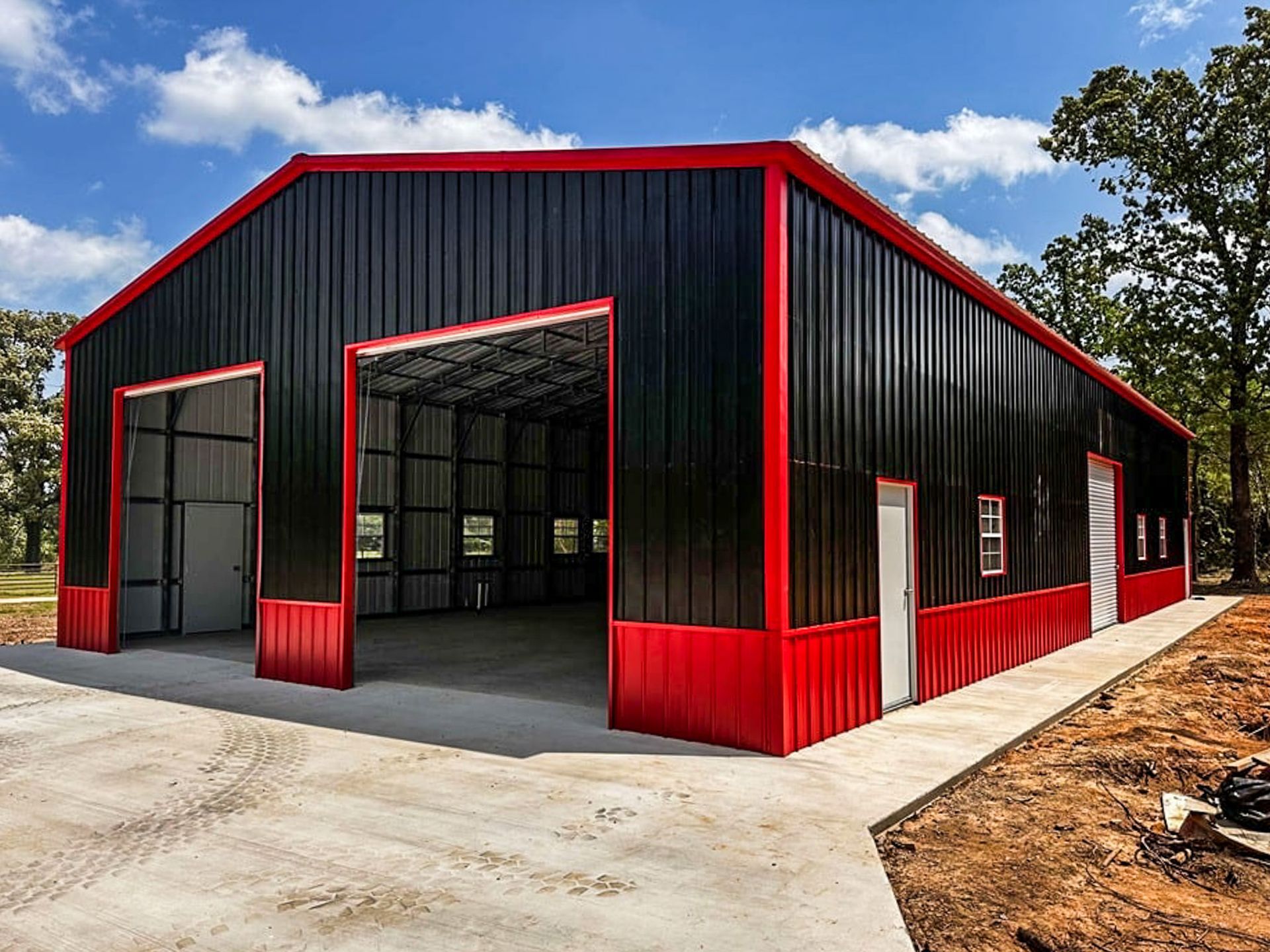
Adding one or both end walls significantly improves wind resistance and keeps rain from blowing in horizontally. Side-wall panels can be added full-height or at wainscot height. A common configuration for boat owners: fully closed back wall, open front, partial side walls.
Fully Enclosed / Garage-Style
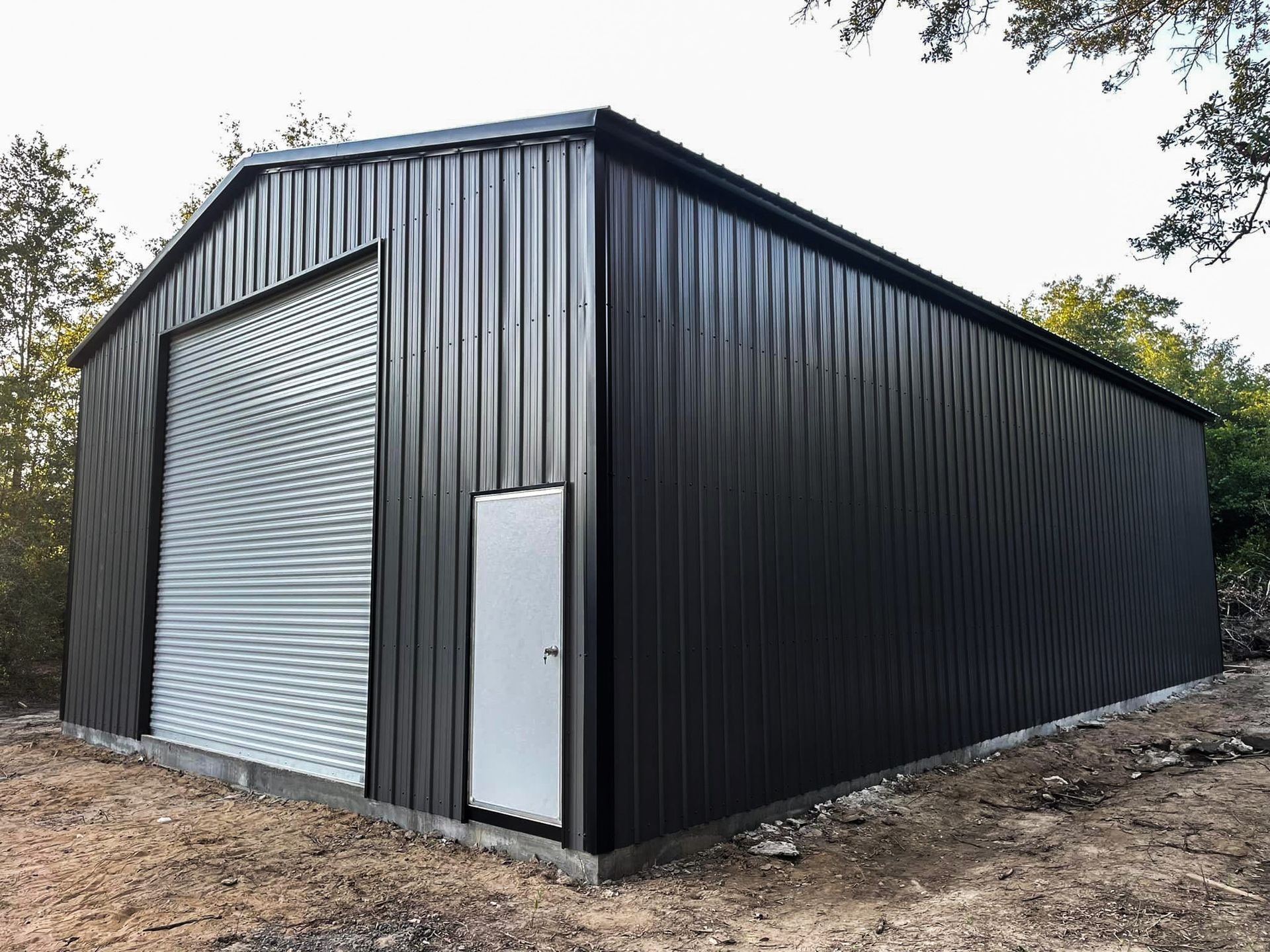
If you want a lockable, fully enclosed structure with roll-up doors, walk-in doors, and optional windows, that is a metal garage or workshop with tall clearance — not just a cover. We build those too. The quote process is the same; just note that you want full enclosure.
Upgrades Worth Knowing About Before You Order
Florida is not a forgiving climate for recreational vehicles left outside. The right upgrades can mean the difference between a structure that survives a hurricane season and one that does not. Here are the upgrades we most commonly recommend for RV and boat cover buyers in Florida.
170 MPH Wind Rating
Florida's coastal and inland areas are regularly impacted by tropical storms and hurricanes. A 170 MPH wind-rated structure uses heavier gauge framing, closer rafter spacing, and certified anchor hardware. If your property is in a hurricane-exposed area — and most of Florida qualifies — ask us about this option upfront. It affects permit approval in many counties as well.
26-Gauge Steel Panels
Standard panels are 29-gauge. Upgrading to 26-gauge adds meaningful panel rigidity and dent resistance — particularly useful for structures where debris impact from storms is a realistic concern. Also improves long-term corrosion resistance in coastal and high-humidity environments.
Anchor Systems
Ground anchors and concrete anchor bolts are essential for any open-sided structure in Florida. We install to local wind load requirements. If your site has a concrete pad, we anchor to the slab. Dirt and gravel pads use auger-style ground anchors. Ask about your specific site condition.
Leg Height Extensions
Standard leg heights start at 10'–12' eave height. Tall motorhomes, fifth-wheels with roof-mounted A/C units, or boats on tall trailers often require 14' or 16' eave heights. Confirm your vehicle's roof height before requesting a quote — we'll add the clearance buffer automatically.
Enclosure Upgrade Path
We can design your open-sided cover so that end walls, side walls, or a full roll-up door enclosure can be added later without replacing the structure. Tell us upfront if you want to leave that option open — it affects the initial framing design.
Permitting and Site Considerations for Florida RV & Boat Covers
Whether your cover requires a permit depends on the structure's size, your county, your property's zoning classification, and whether you have an HOA. Here is what we see most often in Brevard County and Central Florida — but every property is different, and we will help you understand what applies to yours.
When a Permit Is Typically Required
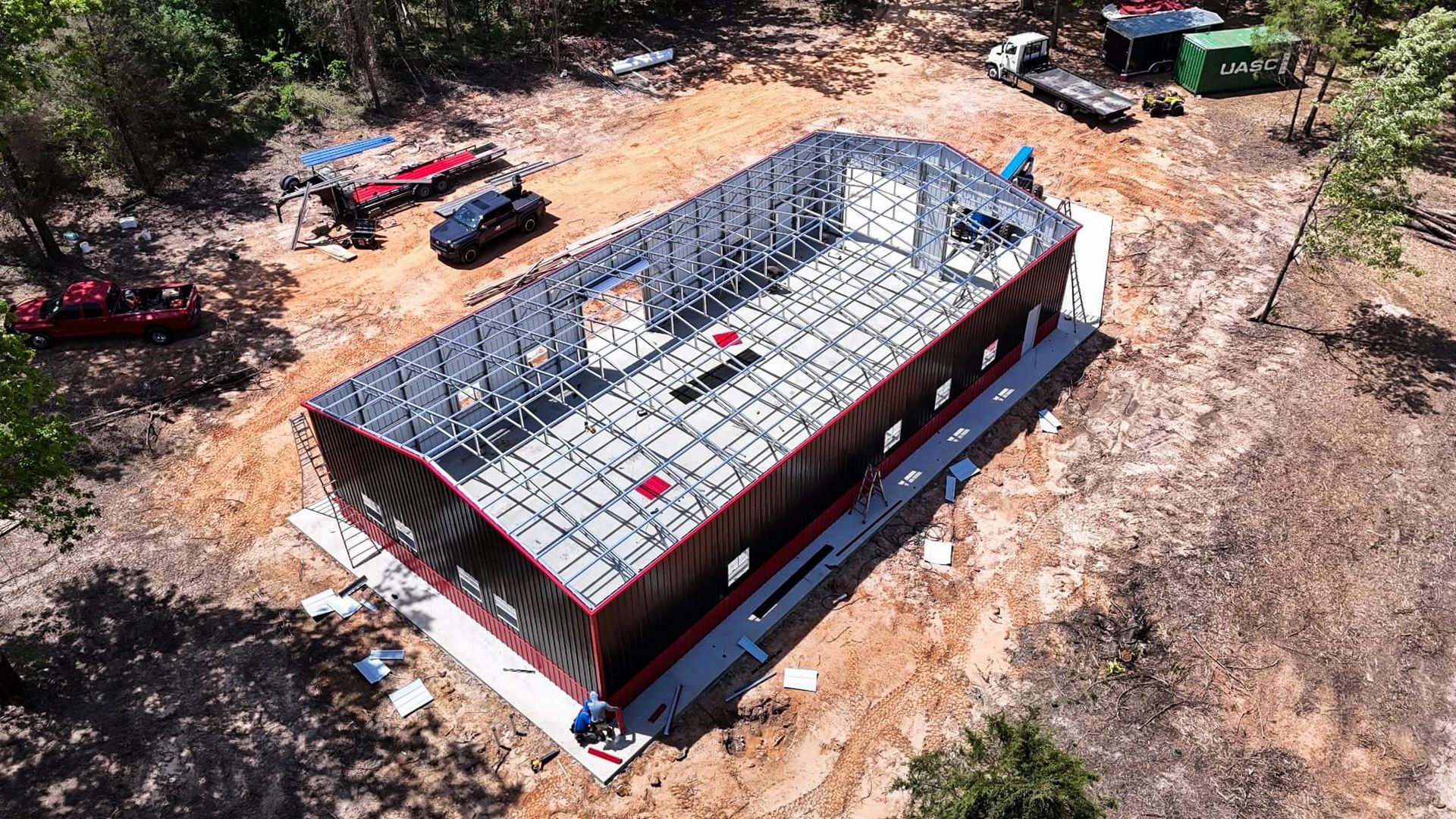
In most Florida counties, any permanent accessory structure — including an open-sided metal cover — requires a building permit if it exceeds 200 square feet. A 20' x 40' RV cover (800 sq ft) almost always requires a permit. Permitting typically involves a site plan, setback verification, wind load calculations, and an engineer stamp for structures rated to 170 MPH. We can help you understand what your county requires before you order.
HOA and Zoning Restrictions
Many Florida communities — especially in Brevard County, Osceola, and Orange County subdivisions — have HOA rules that restrict the size, placement, visibility, or even color of accessory structures. Some subdivisions prohibit RV storage on residential lots entirely. Check your HOA documents or call your association before requesting a quote. We have seen buyers get far into the process before discovering a restriction that blocked the project.
Setback Rules for Accessory Structures
Florida counties require minimum setbacks from property lines, easements, and other structures. Common residential setbacks are 5'–10' from side property lines and 10'–25' from the rear line, but these vary by county and zoning classification. A licensed land surveyor can confirm your property's buildable envelope. We ask for your ZIP code and property address early in the quote process specifically to help flag potential setback issues.
Building Only vs. Building with Pad and Permitting
We can quote building-only (you handle the pad and permits yourself), or we can include concrete pad installation and permitting coordination in the project scope. If you are not sure what you need, tell us that on the quote form — we will ask the right questions to help you decide.
Common Questions About Metal RV & Boat Covers in Florida
These are the questions we hear most from Florida property owners before they request a quote. If your question is not here, include it in the quote form notes — we will answer it when we follow up.
What is the minimum height I need for my RV cover?
The minimum eave height depends on your rig's roof height plus a comfortable clearance buffer. Class A motorhomes typically run 12'6" to 13'6" roof height — we recommend a 14' eave height minimum. Fifth-wheels with high-profile front caps often need 14' to 16'. Always measure your vehicle's roof height at the tallest point (A/C unit, antenna, vent stack) and give us that number on your quote request.
Is an open-sided cover good enough, or do I need full enclosure?
For most RV and boat owners in Florida, an open-sided cover with a vertical roof is sufficient and significantly less expensive than full enclosure. It blocks 95% of UV, handles normal rain well, and provides strong wind resistance with the 170 MPH rating upgrade. Full enclosure makes sense if you want lockable security, plan to do maintenance work inside, or want to add electrical service later.
How much does a metal RV cover cost in Florida?
A basic open-sided cover for a Class A motorhome — typically 14' eave height, 14'–18' wide, 40'–50' long — generally ranges from $4,000 to $10,000 for the structure depending on gauge, roof style, and wind rating. A wider combination cover or a fully enclosed garage-style structure will run higher. Accurate pricing requires your specific dimensions, site conditions, and scope of work. That is what the quote request is for.
Do I need a permit for an RV cover in Florida?
In most Florida counties, yes — if the structure is permanent and over 200 square feet, a permit is required. A 14'×40' RV cover is 560 square feet and will almost certainly require a permit in Brevard County and surrounding areas. Permit requirements vary by county and zoning. We help our customers understand what their specific property needs.
Can I cover both my RV and my boat with one structure?
Yes. A wider-span open-sided structure — typically 24'–40' wide — can cover an RV on one side and one or more boats on the other. We spec these combination covers regularly. Just tell us the dimensions of every vehicle you want to cover and we'll design the structure around that.
What roof style is best for a Florida boat or RV cover?
Vertical-style roofing is our recommendation for Florida covers. The panels run ridge-to-eave, so rain and debris shed cleanly and water does not collect at horizontal seams. Regular and boxed-eave roofs are less expensive but require more maintenance in Florida's wet season. For tall or wide structures, vertical is worth the additional cost.
How long does it take to install an RV or boat cover?
For a straightforward open-sided structure on a prepared pad, installation typically takes one to two days. Structures requiring permits, concrete pad installation, or custom engineering will have a longer lead time. Timeline depends on current scheduling, permitting turnaround in your county, and site readiness. We will give you a realistic estimate during the quote review.
Ready to Price Your RV or Boat Cover?
The more details you give us, the more accurate your quote will be. Include your vehicle make, model, and roof height, your property ZIP code, your site surface (dirt, grass, gravel, or concrete), and any permitting concerns you already know about. We will follow up with the right questions and next steps — no pressure, no runaround.
Not sure about your dimensions yet? Start the quote form anyway and tell us what you do know. We help Florida property owners figure out the right size and configuration every day.